Swizzle Sticks
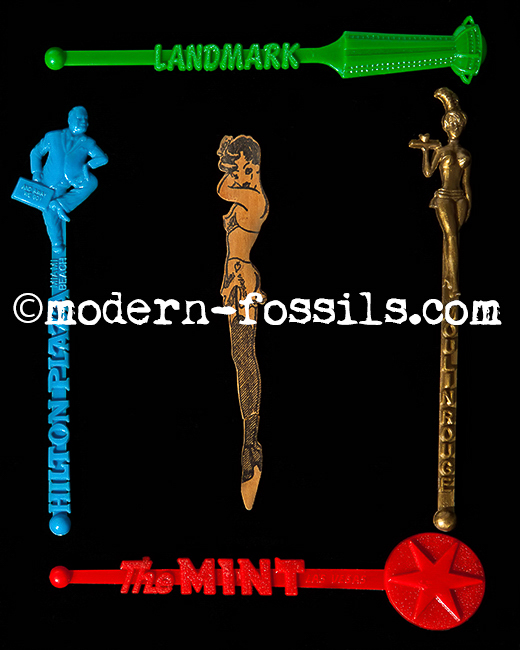 I have seen them, but never realized their significance until hundreds were dumped in front of me as if I were playing a game of pickup stix. They’re so simple yet thought provoking, connecting us to a time when men and women dressed in their best to fly on a plane, eat dinner, or lose it all in a Vegas casino.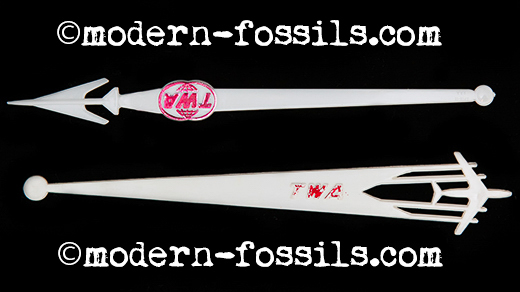
The origin of the swizzle stick is as cloudy and colorful as the coral and pastel colored plastics used to create the twirling sticks. Some credit Cartier with the swizzle stick to rid champagne of bubbles; others say it was an engineer’s fix to get an olive out of his martini. Regardless of the swizzle sticks origin it has evolved from glass rods in the 20’s and 30’s to long legged wooden pinups in the war rationing 40’s and finally colorful caricatured plastics in the 50’s, 60’s and 70’s.
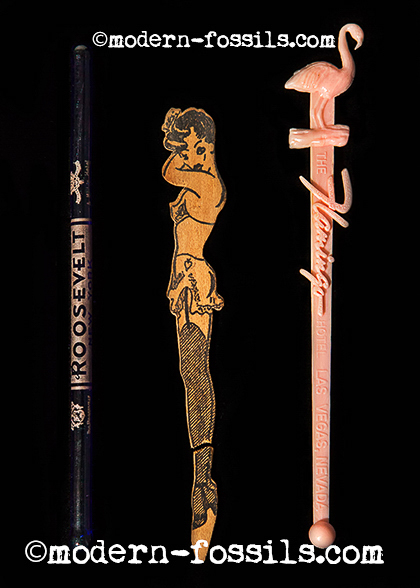
Swizzle sticks were a functional form of advertising and placed in drinks by bars, clubs and restaurants, then saved by customers as memories on a stick. As years have passed swizzle sticks have turned into relics on a stick from another time.
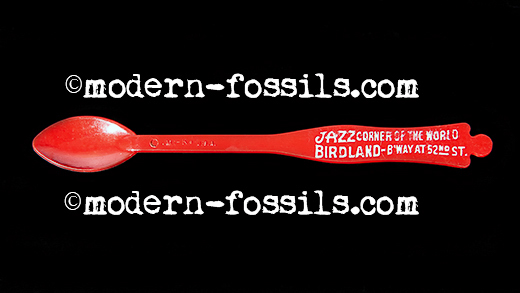 A red stick swizzled by Jack Kerouac at Birdland as Thelonious Monk turns behind a piano.
 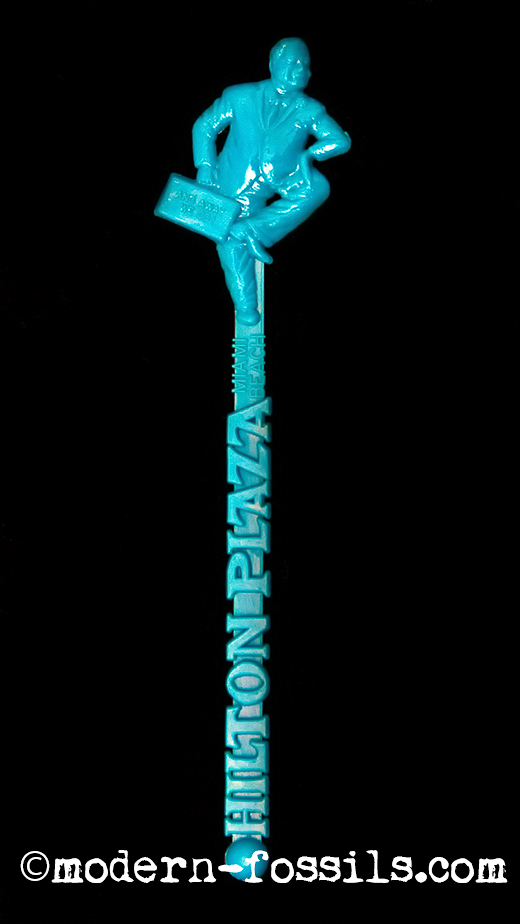 The rise of Miami’s postwar vacation hotspots with, Jackie Gleason, at the Boom Boom Room. A stick turned by Joe Lewis at Americas first integrated hotel and casino, the Moulin Rouge while Lewis Armstrong sings, “Heebie Jeebies.”
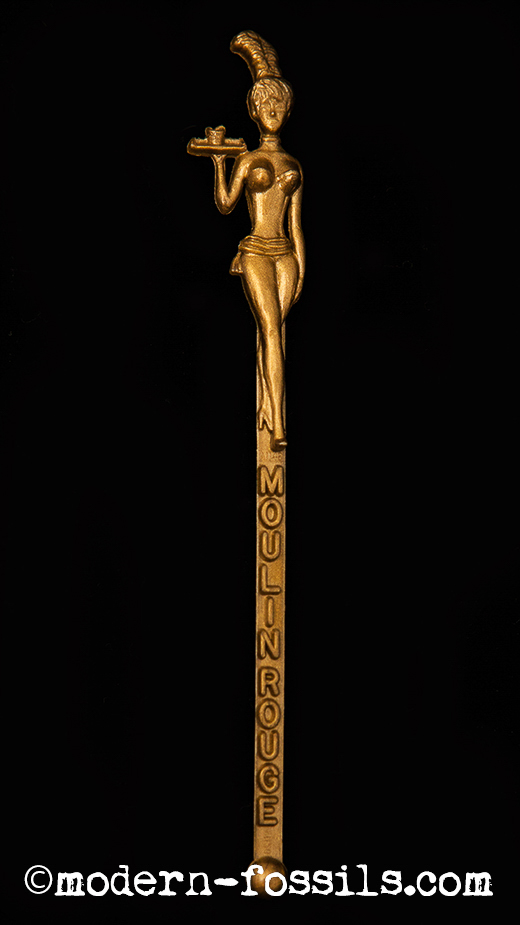 See the forming of the Rat Pack at the Sands
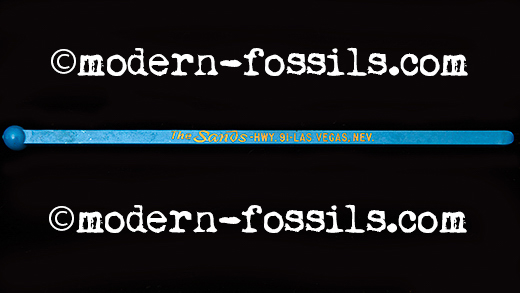 or have an obsessive-compulsive drink at the Landmark, owned by a long nailed, Howard Hughes
  before having a twisted psychedelic nightcap at the Mint with, Hunter S. Thompson.
As people pass and establishments are replaced, the swizzle sticks intertwined with stories are the only thing that remains of a time gone by. Swizzle sticks today are different, they are simple and utilitarian. They function as drink stoppers, coffee stirrers and are proposed to be hi tech date rape drug detectors. It appears that with the rise of hi tech efficiency we have lost our creativity.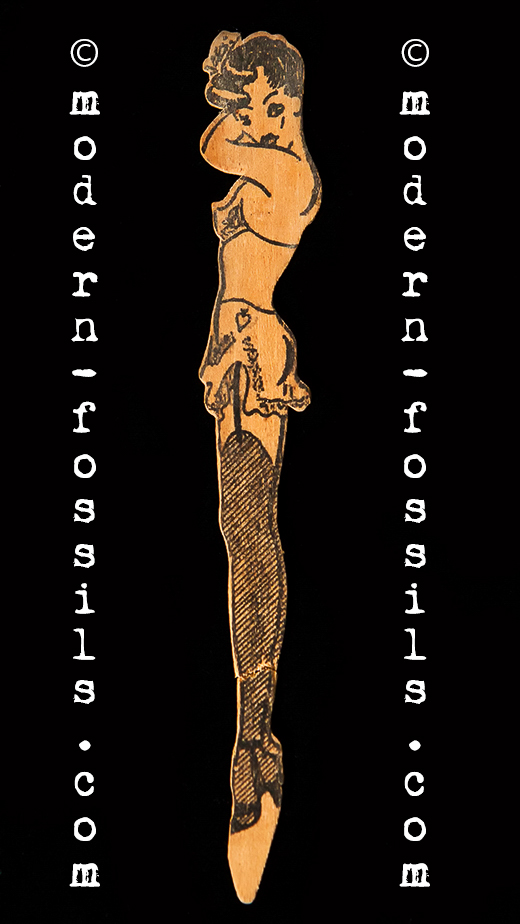

My name is, Holland McGraw, I grew up in Southern California. I moved to Oklahoma in 1996 and in 1999 I joined the Army in Oklahoma City. I served in the 2nd Ranger Battalion from 1999 to 2004. While in the Army I served in OEF and OIF. After separating from the military I earned a BA in History from California State University Northridge and MA in Library Science from San Jose State University. I currently reside in Washington State where I work and run, Some Like It Shot Photography, with my wife.
Leave a Reply