Chicago
By: Holland McGraw
Last September the wife and I took a trip to Chicago prior to peeling off into Wisconsin for photo shoots. This was our second trip to the Windy City, the first time we drove into the city from the highway.
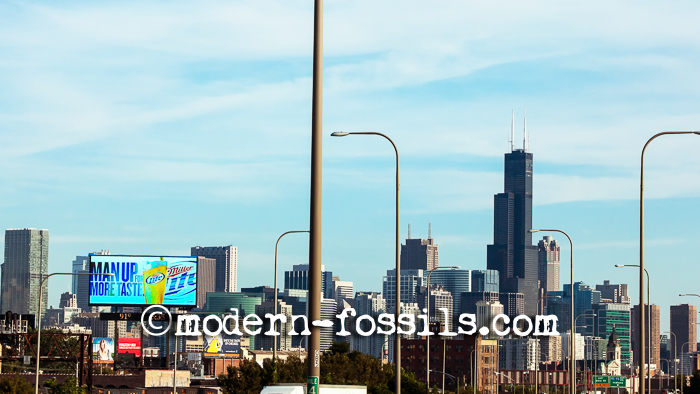
On the outside you see the mirrored facade of a modern city scape, but once you get inside you can see the brick and stone buildings of Chicago’s storied past amongst the new.
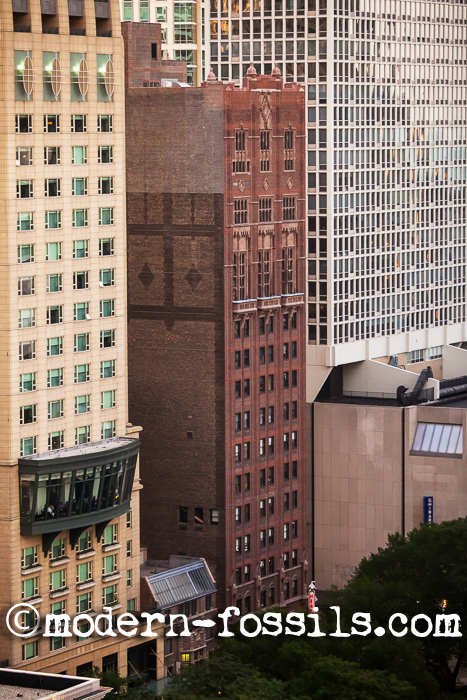
We walked the streets shooting into the wee hours of the night, then woke at sunrise to capture the Midwest City in its early morning glow.
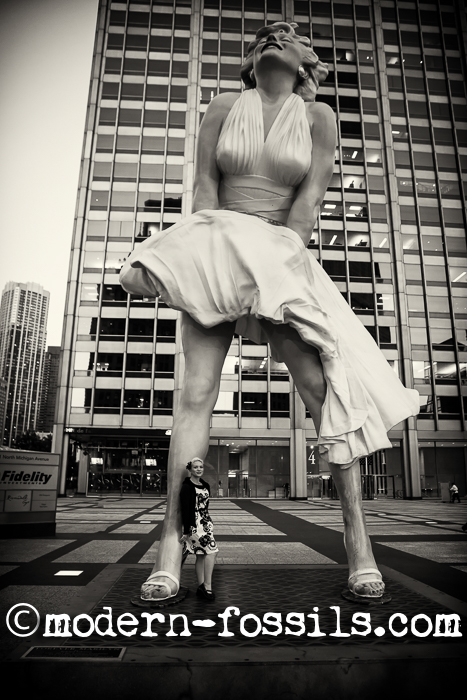
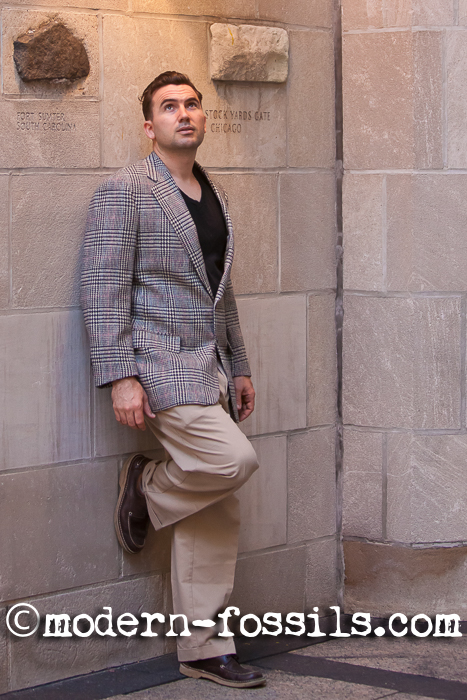
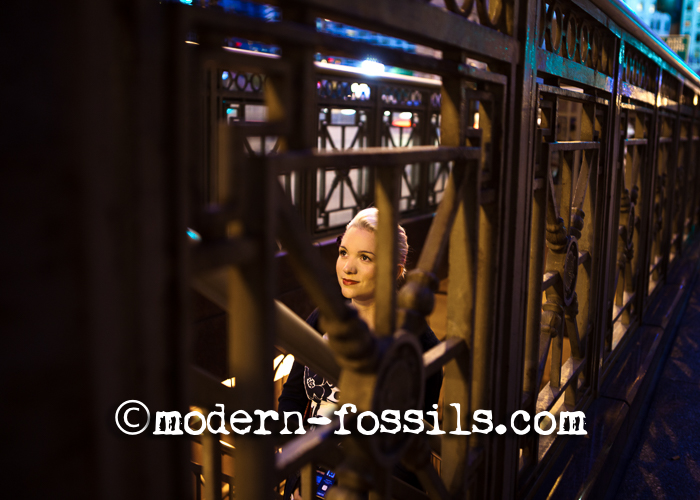

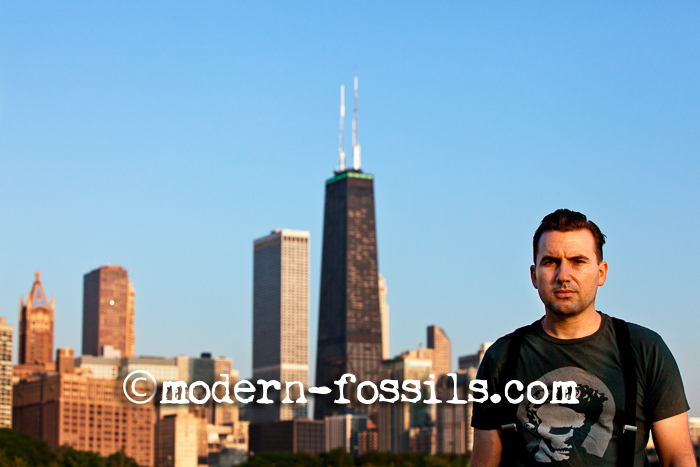
The second go around we flew into the city, took fewer pictures and went on tours of Chicago’s seedy prohibition past.

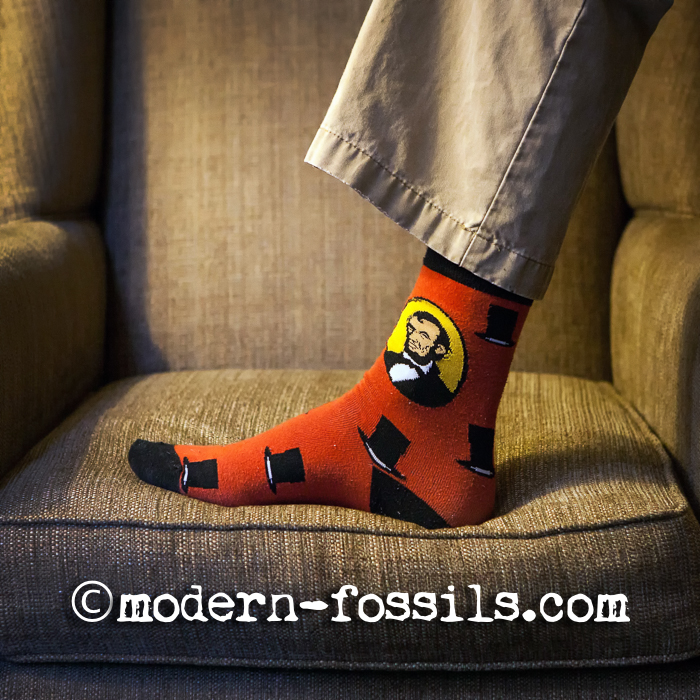
Checking in at the Tremont Hotel, I learned that it was Abraham Lincoln place of choice when visiting Chicago. It felt like destiny because I was wearing my Abraham Lincoln socks.
Our first morning we went on a tour called The Untouchables where a man wearing a fedora with a Tommy gun tie pin pointed out historical locations.
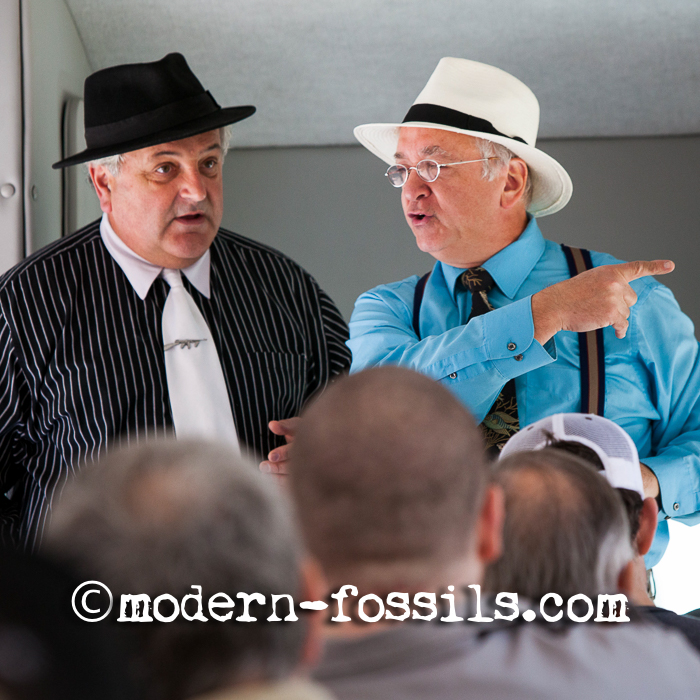
While driving around I noticed a lot of the buildings have been bulldozed. Charles Obanion, the notorious leader of Chicago’s Northside gang, who fronted as a florist and operated out of a flower shop that once made lavish floral arrangements for Gun downed gangsters. The very place he himself was murdered is now a parking lot.
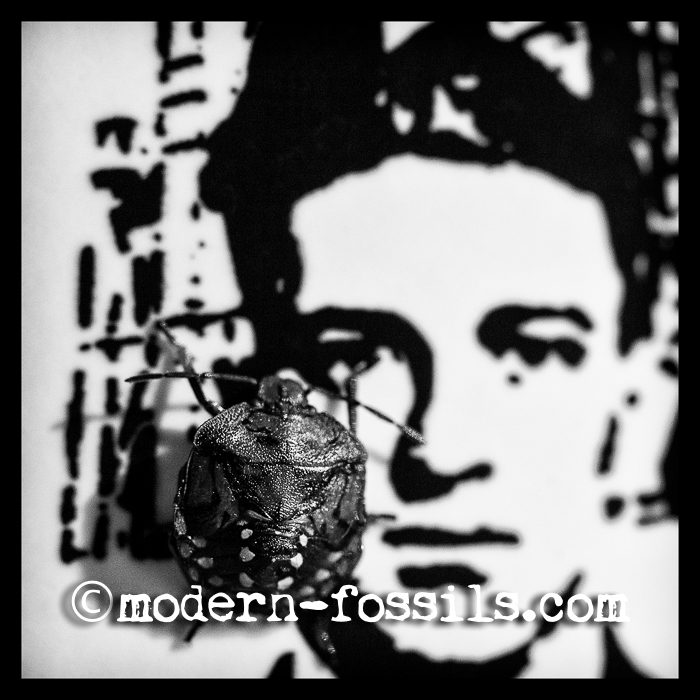
The garage at 2122 North Clark Street, where it’s said, George “Bugs” Moran was late for his own funeral. A place that is today referred to as the St. Valentine’s Day Massacre, is also gone with the wind. In 1967, they tore the garage down and sold the bricks as souvenirs to the public. In its place today are trees and grass encompassed by an iron fence that surrounds a senior living facility. At the end of the tour I won a complimentary Untouchables coffee mug. Below is a macro image of a bug that landed on my mug. The bug is standing on the face of once Northside gang leader, Hymie Weiss.
Although much is gone some has remained. The Green Mill is an untouched jewel. It’s Chicago’s oldest club dating back to 1907. In the 1920’s it was frequented regularly by Al Capone and partially owned and managed by, Jack McGurn. McGurn was Al Capone’s favorite gunmen and believed to be partial planner and lead participant in the St. Valentine’s Day Massacre.
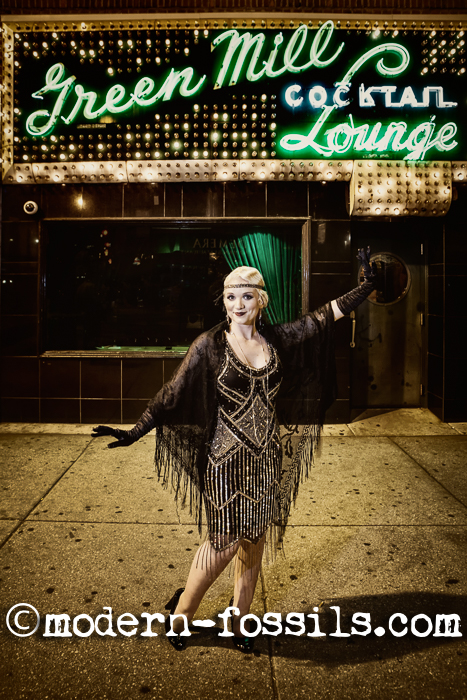
Today the club remains as it did in the 20’s with its lush woodwork, painted murals, dazzling neon lights and is celebrated as Chicago’s premier Jazz club.
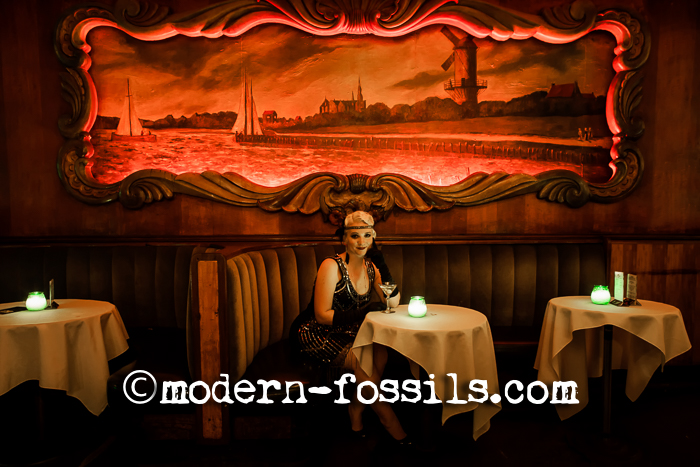
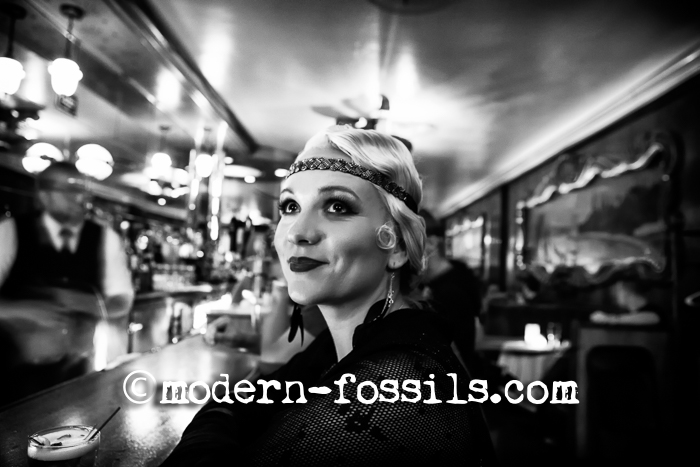
It was at the Greene Mill where I took a number of shots of my wife all dolled up in her 1920’s flapper garb while I drank a dirty martini.
The next day we strolled around Chicago’s Belmont Ave and happened into an antique store, ”The Lazy Dog Antiques.” When I went in I told the man at the counter,
“I like the name of this place.”
He responded, “Yeah, unfortunately we’re on our 3rd lazy dog.”
“They break your heart when they go, we just lost ours.” I told him.
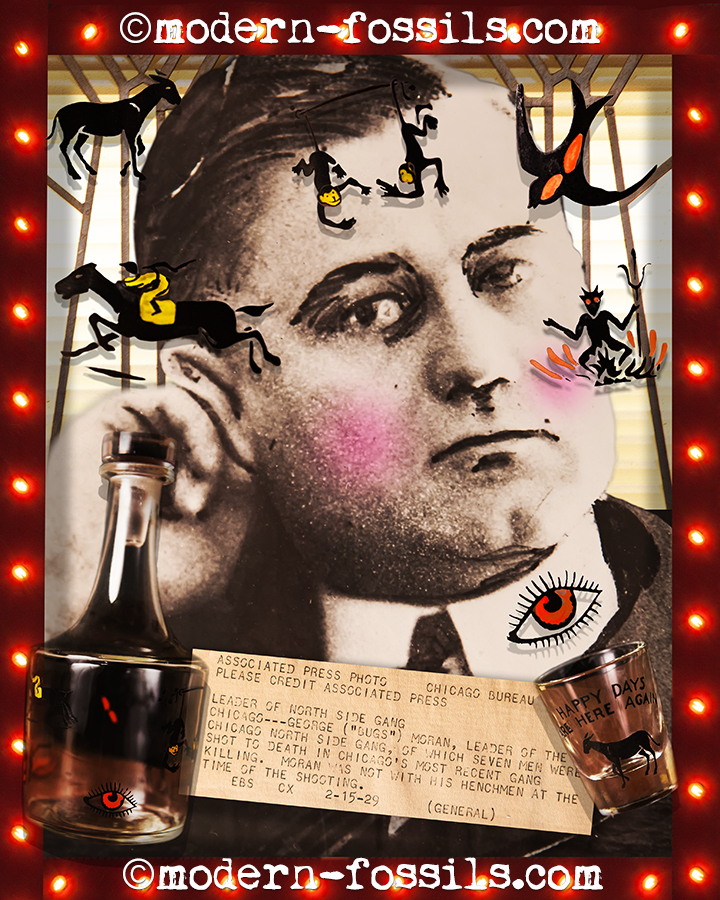
We continued talking until I brought up the prohibition mobster tours I’d been on. “Check this out,” he said, then showed me a picture he acquired, of Bugs Moran, leader of Chicago’s Northside gang that was printed in the newspapers the day after the St. Valentine’s Day Massacre. The thought of going home with an artifact of Chicago’s prohibition past was irresistible.
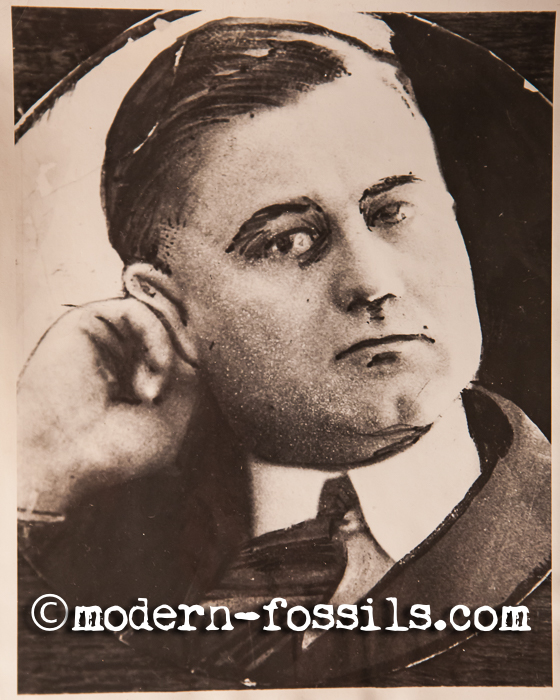
Upon returning to the hotel I examined the photograph, is this a reproduction? Is it a wire? What newspapers used it?
I found that the image was printed in the Chicago Daily News, February 15th 1929, the day after the St. Valentine’s Day Massacre. The photo has been altered and darkened in areas with a pen, so when it’s reduced in size and placed in print, Moran’s features are defined. If you want to see what I’m talking about just look at the image on the screen at a distance and squint.
Overall the picture is an oddball image. Moran is posed in an awkward way slouching in his chair with his head resting on his hand and nose turned towards the light. It’s as if the Associated Press purchased the picture from one of his relatives so they had an image to put in the paper that showed the deceased, along with the gunmen’s living intended target.
On the back of the photo reads:
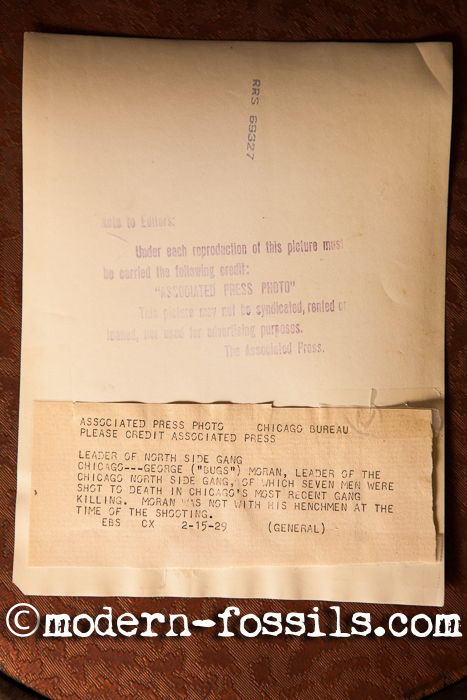
The caption takes you back to the day February 15th 1929 because it was before the shooting had become known as the infamous, “St. Valentine’s Day Massacre.”
On my return to Washington State I purchased an old prohibition decanter with different images that are stuck on the bottle that depict the ills and associations of alcohol. A shot glass came with the decanter that reads, “Happy times are here again.” The images on the decanter are an eye, a jockey racing a horse, a donkey, two monkeys, a swallow and the devil.
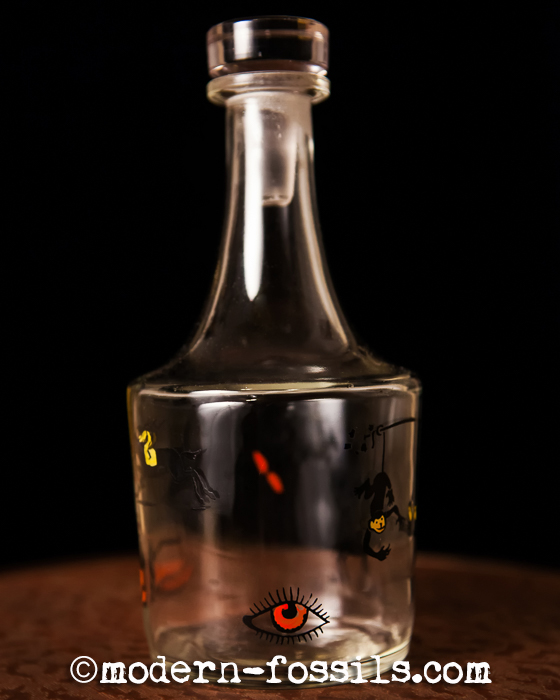
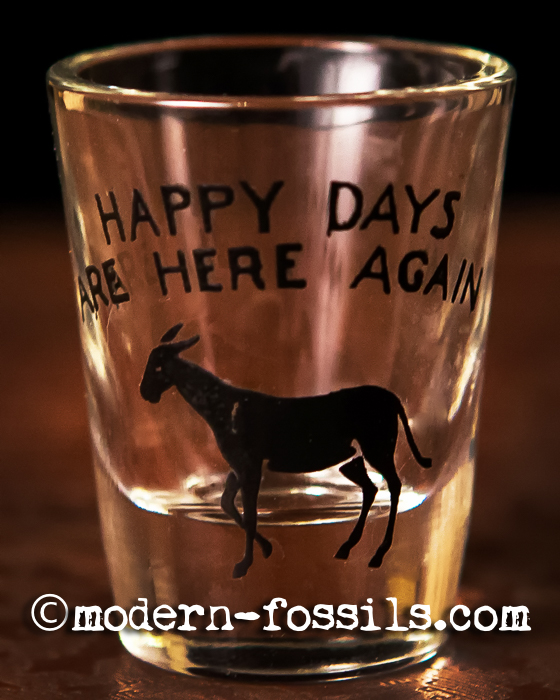
“Happy times are here again,” is the title of a popular song that came out in 1929 and served as Franklin Delano Roosevelt theme song in his 1932 presidential campaign. The donkey is symbolic for the Democratic Party because FDR ran on the platform that if elected he’d repeal prohibition.
What I find interesting about the ills of alcohol displayed on the bottle is that the illegality of liquor was responsible for the rise of crime, corruption, violence and gangsterdom in the 1920’s and 30’s which was far worse than the alcohol itself. Bugs Moran is a testament to this because when alcohol became legal his main source of income vanished. 17 years later his pockets were turned inside out and he was in and out of prison for common crimes until his death. Bugs Moran was known as the one that got away, but at the time of his death in the year 1957, a year that is said to be America’s happiest, he died a poor man and received a paupers burial in the prison graveyard. It was prohibition that made Moran one of the wealthiest men in Chicago and the repeal of prohibition that transformed him back into what he always was, a common criminal.
Notes:
http://www.civilwarinart.org/items/show/57
http://www.weirdchicago.com/greenmill.html
http://www.myalcaponemuseum.com/id27.htm
http://antique-photos.com/en/helpful-info/500-press-photo.html

My name is, Holland McGraw, I grew up in Southern California. I moved to Oklahoma in 1996 and in 1999 I joined the Army in Oklahoma City. I served in the 2nd Ranger Battalion from 1999 to 2004. While in the Army I served in OEF and OIF. After separating from the military I earned a BA in History from California State University Northridge and MA in Library Science from San Jose State University. I currently reside in Washington State where I work and run, Some Like It Shot Photography, with my wife.
Leave a Reply