DIG IT!
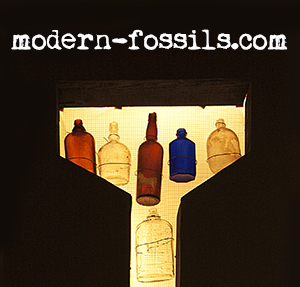
These bottles are from the past, but if you understand their significance they tell a story that takes place in the future. I recently started digging in an old Seattle dump with a friend, Niel. The dump is from the 30’s and gives insight to our past. We tend to find more whisky bottles than anything. Most of the whisky bottles are embossed with the words, “FEDERAL LAW FORBIDS SALE OR RE-USE OF THIS BOTTLE.” Bottles marked with these words are referred to as prohibition bottles. The reference to the whisky bottles as Prohibition bottles sends a persons imagination soaring with images of speak easys, fedora hooded gangsters and flappers, but the truth of the matter is these bottles were made for use from 1932-1964, just one year before prohibition was repealed. The embossing wasn’t mandatory under federal law until January 1, 1935. So, the image of the fedora-hooded gangster could really be a Beatles crazed lady screaming for John and Paul. 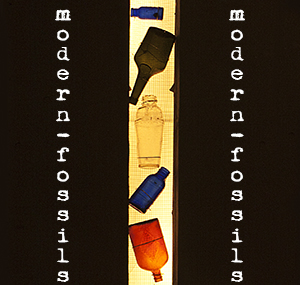 With that in mind, most of the bottles we’ve recovered are primarily from the 1940’s with the exceptions of a few holdover whisky and beer bottles from the 1920’s, which brings up a question you might be asking yourself, why are there whiskey bottles being made and distributed in the U.S. throughout prohibition? A quick answer, the Volstead Act. There were three provisions that allowed for the consumption of alcohol under the Volstead Act:
- Sacramental purposes.
- If you lived on a farm you could make Hard Cider or home made wine.
- Medicinal Alcohol that could be obtained with a prescription from a doctor.
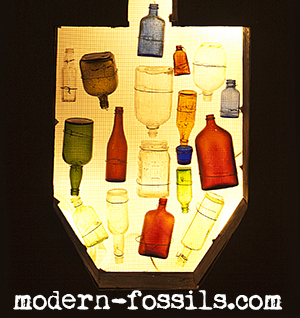 Provision number 3 in the Volstead Act brings us to a popular movie that just came out, “The Great Gatsby,” which was written by F. Scott Fitzgerald’s. The Great Gatsby made his fortune in Drug Stores that fulfilled Dr. prescribed alcohol to patients. It was prohibition and alcohol of the past that built the Drug Stores of today. Prohibition was the foundation on which the Walgreens Drug store was built. Some people might try to persuade you that it was Walgreen’s invention of the milkshake that made them a success, but I believe Mr. Gatsby would tell you otherwise. After the repeal of prohibition, whisky bottles were sold in large supersized bottles to quench the thirst of the masses. Shortly after prohibition was repealed Washington State created the Washington State Liquor Control Board that monitored the distribution of alcohol tallying a profit of eight million six hundred thousand dollars…this is 1936 dollars we’re talking about.
 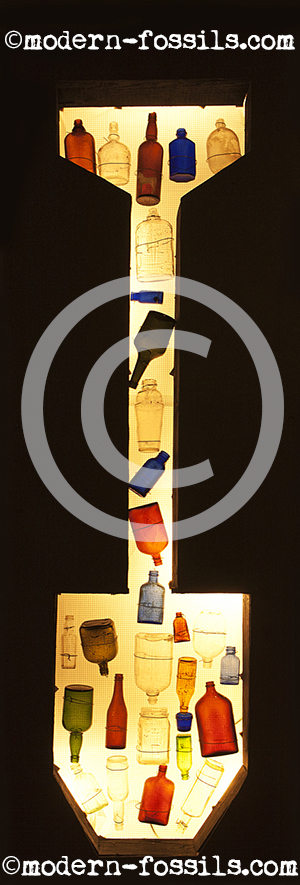 Some of the bottles we’ve dug have both the “FEDERAL LAW FORBIDS SALE OR RE-USE OF THIS BOTTLE,” and Washington State Liquor Control Board embossed on the bottles. The justification for the Washington State Control Board was that, with the repeal of prohibition, the public was out of control. The state government emphasized that alcohol needs to be regulated in order to protect children and citizens in the community. I found this information interesting because alcohol both during and post prohibition has taken the same road into the public as marijuana is taking today. Among the whiskey bottles, we’ve found glass prescription bottles, cosmetic jars, coffee Jars, cottage cheese jars, ketchup bottles, milk bottles, beer bottles, cocktail mixers, local soda bottles, spoons made in Nevada, saucer made in West Virginia, tea cup made in Japan, a steel cup made in Sweden, medical instruments, children’s toys, pieces of jadeite kitchenware, rubber sols and much more. While digging in the old Seattle dump I found that bottles and Items from the past act as different windows to view the past present and future…DIG IT!

My name is, Holland McGraw, I grew up in Southern California. I moved to Oklahoma in 1996 and in 1999 I joined the Army in Oklahoma City. I served in the 2nd Ranger Battalion from 1999 to 2004. While in the Army I served in OEF and OIF. After separating from the military I earned a BA in History from California State University Northridge and MA in Library Science from San Jose State University. I currently reside in Washington State where I work and run, Some Like It Shot Photography, with my wife.
Leave a Reply